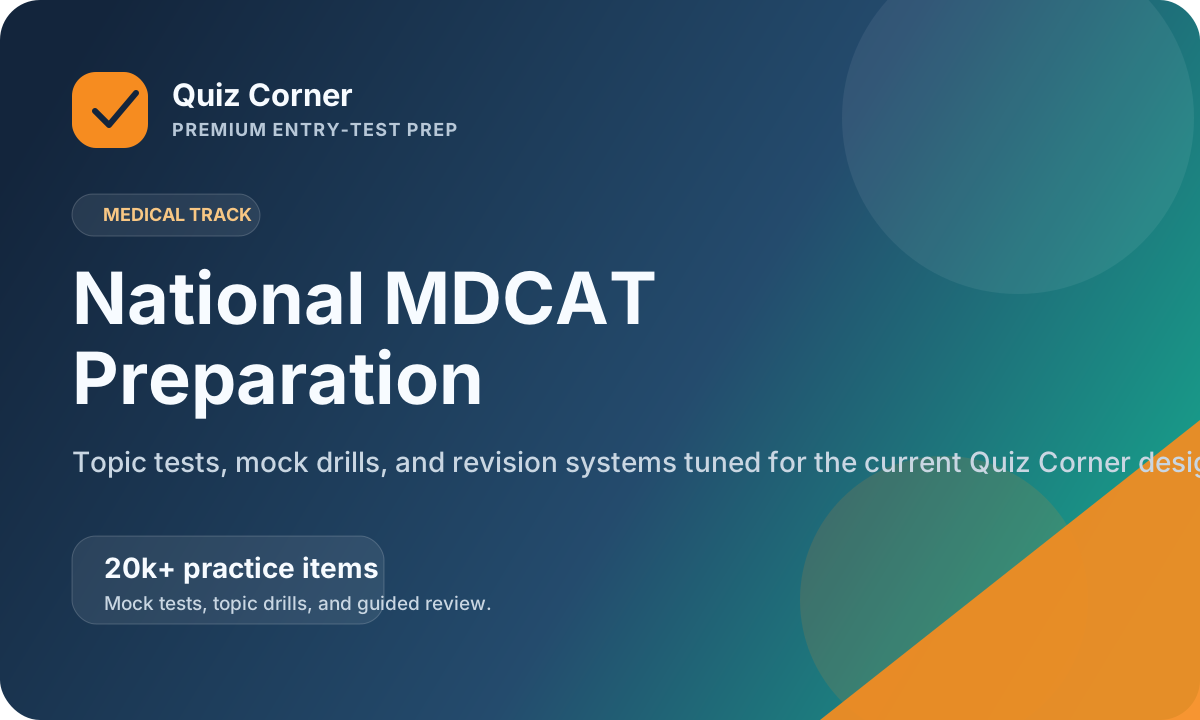
National MDCAT 2026 Preparation

This course includes

  • Unlimited sessions Unlimited test sessions
  • Desktop, tablet, and mobile Use on desktop, tablet, and mobile
  • Full access Full access till exam
  • Scheduled course coverage Complete scheduled course coverage

National MDCAT 2026 Preparation

Prepare for the PMDC-aligned MBBS/BDS pathway with Biology, Chemistry, Physics, English, and Logical Reasoning — updated for the 2026 admissions cycle.

Full session

Rs.15,000

Rs.30,000
Monthly

Rs.4,000

Rs.8,000 / month
Official test date

Official test date: October 26, 2026

Platform access currently configured till 31 Dec 2026

Register Now
  • MDCAT 2026 — what changed

    PMDC has rescheduled the MDCAT 2026 to October 26, 2026. The test uses a unified national syllabus and question bank prepared by PMDC, but is conducted by provincial universities (UHS Punjab, KMU KPK, Sindh route, SZABMU Federal) on the same day.

    PMDC approved a policy change: MDCAT 2026 will be conducted within one month after F.Sc results to reduce the gap between board exams and entry tests.

    Provincial universities conduct the test separately on the same day using PMDC's unified syllabus and question bank.

    This page is the umbrella PMDC-style prep route before students narrow into province-specific admissions.

  • What is NMDCAT? (National MDCAT 2025-26)

    The National MDCAT (Medical and Dental College Admission Test) is the umbrella entry test framework aligned with PMDC (Pakistan Medical and Dental Council) for MBBS and BDS admissions across Pakistan. For the 2025-26 cycle, PMDC moved delivery to route-specific admitting universities — UHS for Punjab, KMU for KPK, Sindh's provincial route, and SZABMU for federal/AJK candidates. This track covers the full PMDC-style syllabus applicable across all provincial routes.

  • How PrepAcademy Prepares You for NMDCAT:

    PrepAcademy provides a structured, data-driven system for NMDCAT preparation. With 54,000+ MCQs covering Biology, Chemistry, Physics, English, and Logical Reasoning, you can drill by topic, complete chapter-wise sessions, and take full-length mock papers — all in one workflow. Our analytics show you exactly where your marks are coming from and where to focus next.

  • Topic-wise and Chapter-wise Test Sessions:

    PrepAcademy breaks the NMDCAT syllabus into topic-level drilling sessions so you can fix weak concepts fast. Chapter-wise tests let you build complete coverage book by book. Both modes give instant answer review so you learn from every mistake in real time — not after the exam.

  • Full-Length Mock Papers (FLPs):

    Our full-length practice papers simulate the actual NMDCAT experience — same question count, same time pressure, same subject distribution. FLPs build the exam stamina and time management discipline that only comes from realistic end-to-end practice. Track your score history across multiple attempts to measure growth over time.

  • Performance Analytics and Progress Tracking:

    After every session, PrepAcademy gives you a clear breakdown of accuracy by subject and topic. See your strongest chapters, identify blind spots early, and refocus your study plan with real data — not guesswork. This is how serious NMDCAT students cut unnecessary revision and target maximum marks.

  • PMDC 2025-26 Syllabus Alignment:

    All content on PrepAcademy's National MDCAT track is aligned with the PMDC 2025 curriculum published for the current admissions cycle. The question bank covers Biology (Zoology + Botany), Chemistry (Organic and Inorganic), Physics, English, and Logical Reasoning — the full subject mix for the current national model. PrepAcademy is updated as official PMDC notices are published.

Ribosomes - 4.2
Nucleus - 4.2
Plastids - 4.2.
Cell Wall - 4.1
Golgi Apparatus - 4.2
Centrioles
Basic Concepts of Cell Biology
Cell Comparisons - 4.3
Mitochondria - 4.2
Peroxisomes, Glyoxisomes and Lysosomes - 4.2
Cytoskeleton
Cell Membrane - 4.4
Endoplasmic Reticulum - 4.2
Nerve Impulse and Synapses - 5.2
Hypothalamus - 5.4
Islets of Langerhans - 5.4
Comparison of Nervous and Hormonal Control
Parathyroid Gland - 5.4
Basic Concepts of Hormonal Control - 5.3
Endocrine Disorders - 5.4
Central Nervous System - 5.7, 5.8
Pituitary Gland - 5.4
Hormones of Alimentary Canal - 5.4
Elements of Nervous System - 5.1, 5.6
Chemical Composition of Hormones - 5.3
Adrenal Gland - 5.4
Thyroid Gland - 5.4, 5.5
Hormones of Ovaries and Testes - 5.4
Bioenergetics and Photosynthesis - 2.4 to 2.8
Cellular Respiration - 2.1 to 2.3
Translocation of Organic Solutes - 9.2
Heart - 9.4
Lymphatic System - 9.8
Basic Concepts of Transport
Blood Vessels - 9.4
Transport of Water and Minerals - 9.2, 9.3
The Immunity - 9.7
Circulatory Disorders
Dominance Relations - 13.1
Crossing Over - 13.3
Multiple Alleles - 13.2
Sex Linkage - 13.4, 13.5
Mendelian Inheritance - 13.1
Rh Blood Group System
Sex Determination
Solving Pedigree Problems - 13.1
Epistasis Vs Pleiotropy
Genes, Alleles and Gene Pool
Gene Linkage - 13.3
Respiratory Disorders - 9.5
Transport of Respiratory Gases - 9.5
Basic Concepts Related To Gaseous Exchange - 9.5
Anatomy of Respiratory System - 9.5
Respiratory Pigments - 9.5
Mechanism of Breathing - 9.5
Male Reproductive System - 11.1
Female Reproductive System - 11.2
Gametogenesis
Sexually Transmitted Diseases - 11.3
Deformities Of Skeleton - 12.6
Basic Concepts of Support and Movement - 12.1
Skeletal Muscle and Related Concepts - 12.3 to 12.4
Muscle Disorders
Joints - 12.5
Comparison of Smooth, Cardiac and Skeletal Muscles - 12.2
Nucleic Acids
Carbohydrates - 3.3
Introduction To Biochemistry & Importance Of Carbon - 3.1
Proteins - 3.4
Conjugated Molecules - 3.6
Lipids - 3.5
Basic Concepts of Biological Molecules and Water - 3.2
Bacteria - 10.1 to 10.3
Enzymes - 7.1 to 7.4
Lamarck
Concept of Evolution Vs Special Creation - 8.1
Evidences of Evolution - 8.6
Digestion In Man - 9.6
Basic Concepts Related To Nutrition
Nutrition In Plants - 9.1
Viruses - 1.1 to 1.4
General Characteristics of Animals - 6.1
Basic Concepts of Biological Molecules
Cartilage (10th)
MISCELLANEOUS
Nerve Impulse and Synapses
Select...
Stoichiometry - 1.7, 1.8
Introduction to Carboxylic Acids - 18.1, 18.2
Physical Characteristics of Carboxylic Acids - 18.3
Reactivity of Carboxyl Group - 18.5
Preparation of Carboxylic Acids - 18.4
Esters - 18.4
Evaporation, Vapour Pressure & Boiling Point - 4.4, 4.5
Intermolecular Forces - 4.1 to 4.3
VSEPR Theory - 10.21 to 10.23
Electronegativity - 10.8
Bond Properties - 10.9, 10.10
Ionization Energy - 10.6
Hybridization of Orbitals & Shapes of Molecules - 10.17 to 10.20
Introduction to Chemical Bonding - 10.1
Types of Bonds - 10.11 to 10.16
Electron Affinity - 10.7
Atomic Sizes - 10.2 to 10.5
Order of a Reaction - 7.6
Rate of Reaction & Specific Rate Constant - 7.1, 7.4, 7.5
Factors Affecting Rate of Reaction and Methods for Determining Rate of Reaction - 7.3
Energy of Activation
Quantum Number, Shapes of orbitals & Electronic Configuration - 2.2, 2.4, 2.5
Sub-Atomic Particles of Atom
Discovery and Properties of Proton - 2.1, 2.3
Equilibrium Constants & Its Applications - 6.2, 6.4
Buffer Solutions - 6.9
Le-Chatelier Principle - 6.6
Haber process - 6.7
Solubility Products - 6.5
Reversible and Irreversible Reactions - 6.1
Equilibria of Slightly Soluble Ionic Compounds - 6.10
Ionization Constants pKa & pKb, Common Ion Effect - 6.8
Properties of Matter - 3.1
Ideal Gas Laws & Ideal Gas Equation - 3.2 to 3.5, 3.7
Distinguish Between Real and Ideal Gases
Kinetic Molecular Theory of Gases - 3.6
Introduction to Electrochemistry - 9.1
Electrode Potential - 9.3
The Electrochemical Series
Explanation of Electrolysis - 9.2
Oxidation States & Color of Transition Elements - 12.1
Electronic Configurations - 12.1
Introduction to Transition Elements - 12.1
Properties of Transition Elements - 12.1
Proteins - 19.1
Enzymes - 19.2
General Behaviour of Alkaline Earth Metals - 11.6
Introduction to s-Block Elements - 11.1, 11.2
Periodic Trends - 11.5, 11.7, 11.9
Properties of Halogens & Uses Of Chlorine - 11.4, 11.8
General Behaviour of s-Block Elements - 11.2, 11.3
Introduction to Periodic Table
Preparation, Properties & Reactivity Alkanes - 14.2
Reactions of Carbonyl Compounds - 17.3
Introduction to Carbonyl Compounds
Reactions of Carbonyl Compounds with HCN, 2,4 DNPH, Na Borohydride & Oxidation Reactions - 17.3
Preparation of Carbonyl Compounds - 17.2
Crystal Lattice - 5.5
Solids - 5.1
Types of Solids - 5.2, 5.3, 5.4
Reactivity of Alkyl Halides - 15.3
Introduction & Classification of Alkyl Halides - 15.1, 15.2
Reactions of Alkyl Halides - 15.3, 15.4
Classification of Organic Compounds - 13.1
Introduction to Organic Chemistry
Functional Group
Isomerism - 13.2
Introduction to Acids & Bases (10th)
Miscellaneous chemistry
Select...
Sentences, Clauses, Fragments
Adjective
Diction
Noun
Punctuation
Adverb
Orientation of Grammar
Redundancy
Conjunctions
Sentence Completion
Tenses
Verb
Pronoun
Modifiers
Concord Mistakes
Collocation
Article
Preposition
Antonyms
Synonyms in Context
Synonyms
Orientation of Vocabulary
MISCELLANEOUS
UHS Essential Word Power - A 2018
UHS Essential Word Power - A, B, C 2019
UHS Essential Word Power - B 2018
UHS Essential Word Power - C 2018
UHS Essential Word Power - D 2018
UHS Essential Word Power - D, E 2019
UHS Essential Word Power - E 2018
UHS Essential Word Power - F 2018
UHS Essential Word Power - F, G, H 2019
UHS Essential Word Power - G,H 2018
UHS Essential Word Power - I 2018
UHS Essential Word Power - I, J, K, L 2019
UHS Essential Word Power - J, K , L 2018
UHS Essential Word Power - M 2018
UHS Essential Word Power - M, N, O 2019
UHS Essential Word Power - N, O 2018
UHS Essential Word Power - P 2018
UHS Essential Word Power - P, Q 2019
UHS Essential Word Power - Q,R 2018
UHS Essential Word Power - R, S 2019
UHS Essential Word Power - S 2018
UHS Essential Word Power - T 2018
UHS Essential Word Power - T, U, V, W, Y, Z 2019
UHS Essential Word Power - U,V 2018
UHS Essential Word Power - W,X,Y,Z 2018
Critical Thinking
Letter and Symbol Series
Logical Deduction
Logical Problems
Course of Action
Cause & Effect
Energy Stored in a Capacitor - 6.10
Capacitor and Capacitance of a Parallel Plate Capacitor - 6.7 to 6.9
Electric Field Lines
Coulomb's Law - 6.1, 6.2
Charging and Discharging a Capacitor - 6.11
Electric Potential & Electron Volt - 6.6
Fields of Force - 6.3 to 6.5
Projectile Motion - 1.18 to 1.22
Momentum and its Conservation - 1.12, 1.13
Equations of Motion
Displacement, Velocity & Acceleration - 1.1 to 1.6
Newton's Laws of Motion - 1.8 to 1.11
Elastic and Inelastic Collisions - 1.14 to 1.17
Velocity-Time Graph - 1.7
Power - 2.6
Interconversion of Potential & Kinetic Energy - 2.3, 2.4
Work Done by a Constant Force - 2.1
Energy and its Conservation - 2.2, 2.5
Biological Effects of Radiation - 13.3
Radioactivity - 13.1
Biological and Medical Uses of Radiation - 13.4
Half Life - 13.2
Faraday's Law and Induced EMF - 9.1, 9.2
Transformer - 9.6
Alternating Current Generator - 9.5
Lenz's Law in Direction of Induced EMF - 9.3, 9.4
Basic Concepts of Electric Current
Resistance & Resistivity - 7.2 to 7.7
Electrical Power & Power Dissipation in Resistors - 7.8, 7.10
Ohm's Law - 7.1
EMF & Potential Difference - 7.9
Colour Code for Carbon Resistances
Basic Concepts of Waves - 4.1 to 4.12
Principle of Superposition - 4.14
Doppler Effect - 4.17 to 4.21
Simple Harmonic Motion - 4.22 to 4.28
Speed of Sound in Air - 4.13
Stationary Waves - 4.15, 4.16
Photoelectric Effect - 11.1
Wave Nature of Particles - 11.1
Energy of Photon - 11.1
Motion of Charged Particle in an Electric & Magnetic Field - 8.1
Magnetic Flux & Flux Density - 8.2, 8.3
Force on a Moving Charge in a Magnetic Field - 8.1
Introduction to Atomic Spectra - 12.1
Rectification - 10.1
MISCELLANEOUS
Select...
Wave as Career of Energy (10th)

Student feedback

4.6

Image DescriptionImage DescriptionImage DescriptionImage DescriptionImage Description
Course Rating
  • Image DescriptionImage DescriptionImage DescriptionImage DescriptionImage Description
    59%
  • Image DescriptionImage DescriptionImage DescriptionImage DescriptionImage Description
    31%
  • Image DescriptionImage DescriptionImage DescriptionImage DescriptionImage Description
    20%
  • Image DescriptionImage DescriptionImage DescriptionImage DescriptionImage Description
    05%
  • Image DescriptionImage DescriptionImage DescriptionImage DescriptionImage Description
    01%
  • PrepAcademy student review

    Wynton McCurdy

    16 courses, 10 reviews
    Image DescriptionImage DescriptionImage DescriptionImage DescriptionImage Description
    a year ago

    Wow, I’ve learnt so much and it has already changed what and how I do things. I can not wait to start the next course.

  • PrepAcademy student review

    Wynton McCurdy

    16 courses, 10 reviews
    Image DescriptionImage DescriptionImage DescriptionImage DescriptionImage Description
    a year ago

    PrepAcademy is the best platform to learn new technologies and courses. I have learned a lot many things from this platform.

PrepAcademy has been an invaluable resource in my journey towards exam success. The platform offers a comprehensive selection of quizzes and assessments tailored to my specific exam requirements. The topic-wise and chapter-wise tests have allowed me to focus on specific areas of study, ensuring a thorough understanding of each subject.

Muhammad Rizwan | MDCAT

Image Description